Translate

Showing posts with label albert einstein. Show all posts

Friday, April 5, 2013

imaginatio

Today, as I was spending another day at the ASCE Conference surrounded by fellow engineers, I found myself wondering why more people aren't engineers. 

I mean seriously.

When I have that wonderful everyday conversation with other people where we ask each other what we're studying, and I tell my conversee that I'm an engineer, they always make some silly remark about "Oh, you must be really smart," or "That's cool, I'm not smart enough for that."

I don't think this is the correct approach.

Many people seem to believe that engineers are born, not made.  They have a "knack".


This may be true, but I feel like I could take any number of career paths by making myself whatever I want to become.  A quantum physicist or a soccer player or a researching mathematician or a dinosaur or a writer or a musician or a painter or a historian...

Some of those things, like a painter, would take a lot more effort for me to do.  I have previously held little interest in painting and therefore have developed little talent with it.  Maths and physics, however, I have already had great interest in and therefore I've developed quite a bit of experience in those fields.  But I wasn't born with any of that...I learned it over time, because that's what I wanted.

I believe that it is the same for engineering.  Sure, there are a few of those with "the knack", but there are natural pianists and doctors and lacrosse players and chemists, too.  It's not like every single engineer was born with some supernatural gift and destiny.  Most of them are just normal people with interests and science.

So if you're not sure what you want to do with your life yet, I suggest you consider being an engineer.  See, here's the best thing about engineering: you can do whatever you want with it.  The other day, my friend who is an engineering major asked me what it is that engineers actually do.  This is a difficult question to pin down because there are a lot of different fields within engineering.  At first I responded that engineers make life better.  But really, people in general try to do that, via all sorts of careers.  My next answer was this:

Engineers make the imagination tangible.

How cool is that job?  Imagine whatever you want, and then make it real.  Ahhhh, coolness just radiates from you.  Impress all the ladies.


But seriously, engineering is an art.  It requires a lot more than just math and science and graphs.  It requires craft and creativity. And it produces beautiful things.

So.  If you like things, you should be an engineer.  Because no matter what you like, engineering has something to do with it.  Just through my first year of my engineering studies, I've already used engineering in canoeing, music, soccer and other sports, home improvement, construction, legos...
allll sorts of things.  Engineering opens all the doors.  If you're not sure what to do, be an engineer and eventually it will lead you to something incredible.

Thursday, March 14, 2013

genius verus

Aaaand...it's Pi day. :D

Hopefully the majority of my readership is well acquainted with pi, though.  So I thought it might be important to celebrate another event in conjunction with pi day.

Don't worry, fellow nerds...pi is not being abandoned, nor is nerd-dom.  

It's time for a birthday party :D

Today in 1879 in Germany, Alberto Einstein was born.  Being German, his parents opted to call him "Albert" for short.  Born on pi day.  He was destined for greatness.
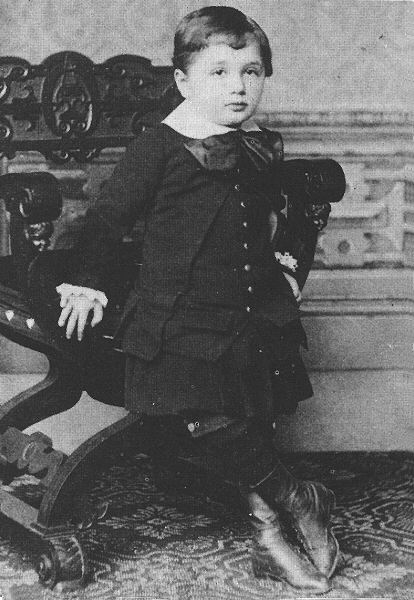
young Albert quickly outgrew the awkward baby stage
and became a dapper young lad.
Most people know the standard Einstein trivia: he was a theoretical physicist, he was a pioneer of the Manhattan project shortly after becoming a US citizen, is one of the more prominent geniuses of history...

I mean, you really cannot dispute the genius of a man whose brain has its own wikipedia article.
By the way, all of the silliness saying that Albert Einstein's brain was significantly smaller than the average man's is...partially true.  We'll have to discuss this fascinating neuroscience later.
(Just don't believe everything you hear about brain sizes; you might begin to believe that women are stupider than men because their brains are smaller.)

So.  Einstein was all about mathematics and physics and the universe and complex stuff like that, right?  Well the funny thing about being human is that you must also dabble in things like religion and arts and other aspects of life.  Man cannot exist on math alone.  Albert Einstein did many things throughout his lifetime.  He learned to play the violin as a child and continued his beloved hobby passionately, perhaps to get his mind off math once in a while.  He went through three marriages and had three children and learned a thing or two about love in the process.  He offered a fair amount of political and theological commentary, as well as physical theories.  His ideas in physics were met with much higher regard, however, leading to a Nobel Prize in physics.

Einstein would often hang out with Niels Bohr (Sorry, that's not a creation of Bram Stoker...it's a scientist) and discuss quantum mechanics.  You know, the way that buddies do. 
Despite being so heavily involved in math and physics, Albert Einstein is quite quotable. Many people seem to think that people who are crazy with the hard sciences are difficult people to understand and are probably too smart to talk to, but I believe that a conversation with Einstein would be fulfilling, enlightening, and enjoyable no matter what your IQ was or where you were in life.

Here are a few quotes of his.  He had many, and it's difficult to choose a favorite. (If you have a favorite, mention it in the commentary of this post!)
  • Everything should be made as simple as possible, but not simpler.
  • Science is a wonderful thing if one does not have to earn one's living at it.
  • The only thing that interferes with my learning is my education.
  • Peace cannot be kept by force. It can only be achieved by understanding.
  • The most incomprehensible thing about the world is that it is comprehensible.
I'm often inclined to list Albert Einstein as a personal hero or inspiring example in my life, and I think the vibe that people get from that is "Oh, look who's the physics hotshot now" which is really not what I'm aiming for.  He was a lot more than just a high-functioning brain somewhere in the universe.  Some science, some philosophy, some music, some religion, some math,  some politics, some love, some humor...


And a whole lot of life.

Wednesday, February 20, 2013

machinor

So it's Engineering week at my university.  What this means for me, an engineering student, is that I get free food. :D

I guess the university wants to try to make engineering look cool so that more people will be interested in it as a major or something.


As if they really needed to convince people that it's cool.

A friend of mine believes it's more likely to give a pep talk to those of us already in the program.  We're hitting that awful part of the year when all your tests pile on and your classes smell bad (mostly figuratively) and you can't get enough sleep for the life of you, and so you do irrational things like contemplate switching to be an English major.

Sorry, English majors.

So the college of engineering put up these signs all over campus that say things like
"Without engineers, there would be no water slides or roller coasters or happinessYou're welcome."

This may be a bit of an exaggeration...maybe...but really, engineers are pretty concerned about improving people's lives and creating new solutions to new problems.  Which is useful and perhaps altruistic in its own way.

Most people have heard of engineers before but it can sometimes be hard to really get a feel for what they do.  Writers write, for example.  Bakers bake, directors direct and actors act, officers office, lawyers lawy, and engineers....engine?

Here is one job description:

"Scientists investigate that which already is;
Engineers create that which has never been." 
-Albert Einstein

In fact, the verb "engineer" has its roots in the Medieval Latin verb for "to design or devise".

It's a pretty broad job description, really...everything has been designed and devised.  Look around you.  The device you're reading this on has been engineered many times over.  Whatever you're standing or sitting on has been carefully designed by an engineer.  A lot of what you're wearing had some engineering involved in its manufacturing, if not in the product itself.  YOU ARE SURROUNDED BY THE PRODUCTS OF ENGINEERS.

So why not become one and participate in the creation of your own future?


Thursday, December 20, 2012

draconum

Today marks the 200th anniversary of the publication of the Brothers Grimm's first book of fairy tales.

...is that the possessive of "Brothers Grimm"?  Personally, I'm more in favor of "Brothers' Grimm", but...either way, now you know that it belonged to them.

So originally I wanted to make a post about the end of the world, since today is supposedly the last day we have to live.  But I think I will postpone that until tomorrow morning (explanations and justifications to come...tomorrow) and go for some commentary on fairy tales instead.

See, procrastination at its finest.

For now, it's time to spend my last hours talking about fairy tales.
Which is something I never thought I would be doing.

So, 200 years ago the Brothers Grimm wrote down some fairy tales.  They didn't invent these tales, because the description of these two men provided by Google is:
"The Brothers Grimm, Jacob and Wilhelm Grimm, were German academics, linguists, cultural researches, and authors who together collected folklore."
So although they are listed as authors, they also collected folklore, and I have reason to believe that fairy tales fall under the "folklore" genre.  Even though the fairy tales are so universally popular and often common.  Or perhaps because they are.  I mean, we're still making fairy tale movies. All the time.  And even though I've heard the story of Snow White and the Seven Dwarfs countless times and seen many movie variations and read the story in countless variations....I still watched a Snow White movie last night.

And the funny thing is, I still found it engaging. Despite Kristen Stewart! I still found things to think about that I hadn't necessarily thought about in that way before. I knew exactly what was going to happen throughout the plot, and I still had hopes and anxieties concerning the ending.
And, of course, I still wondered what in the world is the appeal of kissing a dead person.
Any clarification on that would be welcome in the comments.

So, what is up with our seemingly innate fascination with fairy tales?  I mean, here I am, a known skeptic and perhaps even hater (or anti-fan?  do those exist?  Well, they do now, and I am one) of fairy tales, and yet...they're making an appearance here on Martin.

And they're so cliché!  We have countless fairy tales, but they all have so many things in common.  Magic and curses to be broken, orphaned children, stepmothers, kissing dead people, dragons and other fantastic creatures, groups of three, princesses, kingdoms, good versus evil, the power of love...

So it might be nice to have all this touchy-feely imagination stuff balanced out by some hardcore science and realistic mathematics.  Enjoy the following quote from Albert Einstein:
“If you want your children to be intelligent, read them fairy tales. If you want them to be more intelligent, read them more fairy tales.” 
Apparently our friend Mr. Einstein is an advocate of fairy tales. Perhaps this is a conspiracy, though, because both Alberto and The Brothers Grimm were German-born...
So, perhaps a quote from an Englishman. G.K. Chesterton:
“Fairy tales are more than true; not because they tell us that dragons exist, but because they tell us that dragons can be beaten.” 
That no matter how evil your stepmother is, or how many apples she gives you, or how many small men you have to clean up after, there's still a way for you to win a man and a kingdom in the end.
That even after a wolf has eaten your grandmother and in some versions, yourself, his digestive acids are very slow, and he didn't chew his food well at all, so a nearby lumberjack can come and free you by chopping the wolf up with his axe while keeping you unharmed.
That after someone curses you to die at the hand of a spinning wheel and your father destroys them all, then foolishly sends you to live far away from any protection so you die anyway, fairies can drug everyone into sleeping for thousands of years until a prince finally finds his way to the castle (needed to wait for GPS to be invented) where he can kiss this rotting dead girl, suck the death out of you, and marry you.

It gives us this unrealistic expectation that no matter how bad it gets, there's still a way for it to end happily.  It will require sacrifices, but after the big battle, you're settled down with a prince, the dragons are gone, the kingdom is at peace, and the happily is ever after.

But it is nice to be taken out of our own world and our own dragons to a much more objectified world, where villains wear capes and the good-looking are also good people.  Where things are predictable and there's always a catch to the evil plans. Where there is a clear line between good and evil, where evil is fated to fail, and good is destined to prevail.
And I think it's important to visit this place from an early age, and to indulge in a return on occasion, but certainly not to live there.  It is important to live in your own world, which is indeed a different world from anyone else's.  Our individual worlds are affected and sometimes even defined by other worlds though (such as Jupiter shielding the earth from fatal asteroid attacks...there's some science for you) which is why it is important to choose worthwhile worlds to visit.

So here's an answer that might just say a lot about you:
What is your favorite fairy tale?  And if you care to provide any explanation, go for it.