Translate

Showing posts with label rights. Show all posts

Thursday, July 9, 2015

pulchrae

So, in case you somehow didn't notice, the 4th of July happened last week.  For my fellow Americans, Happy Independence Day!  For any international readers, this is still important.  Don't stop reading!

There have been a lot of changes going on in the world lately as well as in the United States: changes in government, in policy, in economy, in society... the world is a thoroughly dynamic place, and we've already discussed this to some extent here.  Some of the changes have happened overnight, others have come in subtle shifts that can only be seen over decades or even centuries.  I sometimes wonder if the Founding Fathers had any idea what this country would look like today.  It was, after all, an "experiment in democracy."

In anticipation of the 4th of July, I read the words of a patriotic hymn, America the Beautiful, and they really touched me.  I will include them here for your reference:


O beautiful, for spacious skies, 
For amber waves of grain,
For purple mountain majesties
Above the fruited plain!

America! America! God shed His grace on thee,
And crown thy good with brotherhood
From sea to shining sea!


O beautiful for pilgrim feet,
Whose stern impassion’d stress
A thoroughfare for freedom beat

Across the wilderness!
America! America! God mend thine ev’ry flaw,
Confirm thy soul in self-control,
Thy liberty in law!


O beautiful for heroes proved 
In liberating strife,
Who more than self their country loved,
And mercy more than life!

America! America! May God thy gold refine
Till all success be nobleness,
And ev’ry gain divine!


O Beautiful for patriot dream
That sees beyond the years
Thine alabaster cities gleam,

Undimmed by human tears!
America! America! God shed His grace on thee,
And crown thy good with brotherhood
From sea to shining sea!


Please stop to appreciate those lyrics.  Take the time to look up any of the words you don't know, so you can fully appreciate their meaning.  We'll wait.

Ready?

Oh, I could probably write tomes here; I have so many thoughts about this song.  
My initial reaction was one of disappointment and remorse; the greatness that was in America--as a beacon of freedom, a place where struggle leads to success, where brotherhood abounds-- is no longer there.  The boundless potential of this land seemed to be cut off because of how things have changed.  From riots and poverty running rampant through streets once "paved with gold", to conspiracies and lies and a general distrust of the government, to pollution and carelessness littering the alabaster cities and destroying the fruited planes...There is a lot to be wanted here.

Luckily I got pulled out of my bitterness after a few days, once the Fourth actually rolled around.  Despite all of the problems and plagues in this country, I saw that people are generally doing their best to live the American Dream--to work and establish their own position in life, to serve their neighbors and wipe others' tears away.  I drove through the majestic mountains, paid respect to the sacrifices of soldiers, veterans, those defending our freedoms by deeds and by words.  We're certainly not where Katharine Lee Bates envisioned when she wrote the lyrics to America the Beautiful, but that doesn't mean that we're not on our way.

For all I know, America never has reached that Beautified state described in the poem.  Maybe it's just me, that I tend to idealize the founding fathers and their generation.  I forget that the Union struggled so hard to even envision unity in its infancy.  I revere Abraham Lincoln, and think "if only we still had the values of that day..." while looking over the immense crises that the country faced at that time.  I think of the "greatest generation" and wonder why, in only a few short generations, things seem to have fallen apart in society.  But I must remember that the greatest generation only earned that title after being proven by a childhood during the Great Depression, only to grow up and fight in the Second World War.  Certainly these ideals were hard to see at those times, too.

I've come to realize just how much of a vision America the Beautiful is--a vision of what is to come in the future.  Generations of Americans, after coming from other parts of the world and so many different circumstances, have fought for that dream.  Millions of people have given their lives in exchange for getting one step closer.  The dream isn't lost if we're still working towards it.

I believe that this nation and this land have certain promises and rights associated with them.  Be it through divine providence, the grace of freedom, or the plain and simple opportunity and legacy of hard work, this is an incredible place.  But with those rights comes responsibility.  In order for this to continue being the Land of Promise that it is, it requires the best out of each of us.  In order to uphold the rights of life, liberty, and the pursuit of happiness, we must treat life responsibly, cherish freedom, and work hard to magnify the happiness we have and share it with others.

I honestly think that this nation is still in its infancy, and that it has yet to grow and achieve its full potential--even taking into account all the many advances that have been made so far.  But reaching that potential is a dream that belongs solely to us, the American citizens. And it is our responsibility to make it happen.


Thursday, February 21, 2013

identitatem

It's still Black History Month, so to celebrate I thought I'd learn some American History that I previously did not know, and then share it with the world in general so that you can have the opportunity to learn things, too.

Today, February 21st marks the assassination of human rights activist Malcolm X. 


Many inspirational leaders grow up in hardship and overcome it to live a fulfilling life, often because of a strong influence from their family.  Malcolm X, born Malcolm Little, did not.  He was born in 1925 in Nebraska, and suffered much due to racism and hatred.  By his early teens, many of his family members had been harassed by white supremacists.  His father, a black minister who often gave controversial sermons, was brutally killed and his uncle was lynched.  His mother was later placed in a mental hospital and young Malcolm fell into the cracks between foster homes.  He dropped out of school and moved to Boston where he got involved in crime.

At the age of 21, Malcolm X was imprisoned for burglary.  While there, he encountered the ideology of the Nation of Islam, a movement that aimed to improve the quality of life of humanity, specifically African Americans. He was excited by their ideas of black nationalism and racial separatism. It was because of this that he changed his last name to "X", to symbolize his stolen African identity. After six years in prison, Malcolm X was released and became a prominent leader within the Nation of Islam.  He was soon known for his harsh indictment of racial hate crimes and his support of liberation by any means necessary. He was not always on the same page as other civil rights champions, who called for integration and understanding.  Malcolm X advocated racial pride and identity and fierce self-protection.


Malcolm developed as a powerful orator and was admired by much of the African American community.  Eventually his philosophies became very involved and outspoken, such that he was suspended from the Nation of Islam.  This did not inhibit him from being politically active, although it did allow him to investigate other ideologies and reconsider his approaches to ideals.  After breaking with the Nation of Islam, Malcolm made a pilgrimage to Mecca, where he was inspired by the racial harmony amongst orthodox Muslims there.  Upon returning to America, X changed his name to El-Hajj Malik El-Shabazz and founded the Afro-American Unity, an organization that promoted black identity and argued that racism rather than the white community was the cruelest enemy of African Americans (and indeed, any person).  This less extreme philosophy gained many followers and Malcolm X continued to be a strong leader and an involved individual.
Unfortunately, standing up for something sometimes only makes it seem further beyond your reach.  Malcolm was targeted by many who disagreed with him.  In February of 1965, his home was firebombed. He managed to escape, but a week later was shot by Nation of Islam members--his own people--at an organization rally.  
Malcolm's life and death were surrounded by controversy.  Many people condemned him for his extreme views and overzealous methods.  Others revered him for his boldness and strength in the face of pain and difficulty.

To me, Malcolm X was a firm believer in the value of identity.  He went through a few identity changes, outwardly changing his name from Malcolm Little to Malcolm X to El-Hajj Malik El-Shabazz as a reflection of his inner shifts in identity: from identifying himself as a downtrodden shadow of society, to a bold and relentless fighter for his and his peoples' rights, and finally to a warrior for equality and personal identity.  As he encouraged others to be true to their identity, he discovered his own.

Monday, January 21, 2013

dilectus

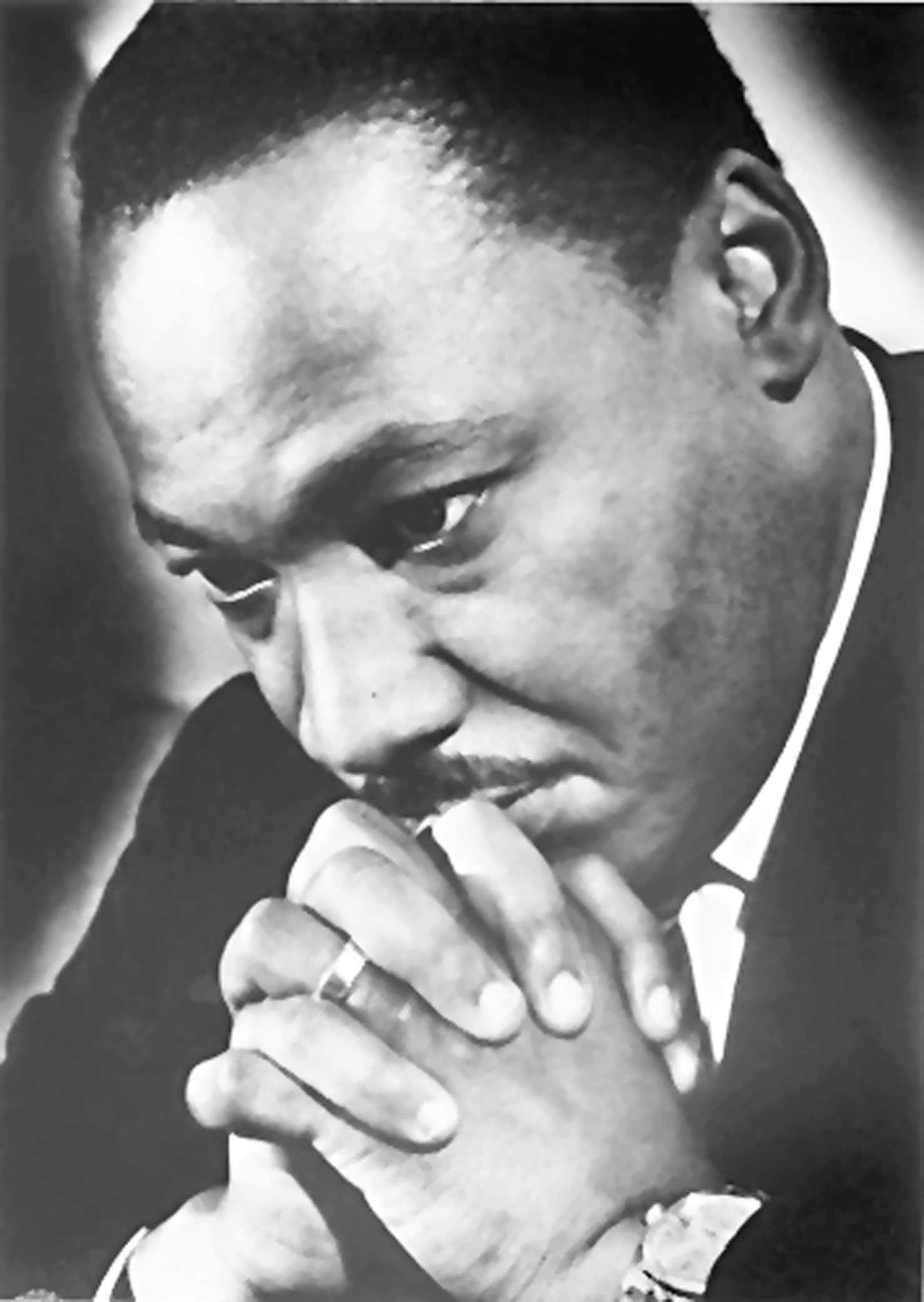
As I'm sure you've noticed by now, today is Martin Luther King Jr. Day.  It's one of the easier days to remember because we have school off and other things like that to point out that today we should be doing something out of the ordinary.

So, what did we use this opportunity to do?

Well I for one attended to my tomes of homework. I'm not really proud that this is how things ended up, though.. There are so many better ways to commemorate Reverend King.

I'm not going to focus on telling you facts about King's life. You all probably know that he was an African American supporter of the Civil Rights movement in the 50's. You all know that he had dreams, that he gave speeches and wrote letters from prisons he was placed in because of his nonviolent acts of civil disobedience.
He was a pretty influential guy, right?  So why do we dedicate an entire day of our busy lives to him?  The only other people who have a US Holiday to their name are George Washington and Christopher Colombus. The idea for MLK day was originally proposed in 1979, but the bill didn't pass. Many people were opposed because the federally-paid holiday would affect the budget, plus King was a private citizen who had never held public office.  This mode of honoring him would seem to break tradition.

Eventually MLK day was signed into law in 1983 and was first observed in 1986.  Some states were reluctant to observe the holiday, though.  The bill had been met with an overwhelming (veto-proof!) vote in congress, but many states tried to find loopholes such as combining it with other holidays or changing its name.  The holiday wasn't officially observed by all 50 states until the year 2000.

That's thirteen years ago, people.  Most of us were alive then, and there were some states still stubbornly avoiding honoring Martin Luther King Jr. Day.

Aside from the cost concerns of a holiday and the fact that it has probably the longest name of any US holiday, why would a state go so far to avoid this holiday?

Well, to answer that, we really need to understand what this holiday is recognizing.  Obviously Reverend King is best known for his involvement in the Civil Rights movement. He was also an inspirational speaker on many other topics (I encourage you--and myself--to read more of his speeches and writings) but no doubt MLK day chiefly recognizes his belief in civil equality. In fact, Martin Luther King Day has been observed in places outside the US- including Hiroshima, Toronto, and Jerusalem under various circumstances.  Each of these observances have been in honor of King's work for civil rights.
So believe it or not, there are still people who oppose civil rights.  In the 21st century.  And some of those people hold public office.  So they were elected by yet more people who seem to oppose the ongoing fight for civil rights.

Is it just a race thing?  As sad as it is to admit, there is still a great deal of racism in the world.  You read about slavering ending with the Civil War, and then the Civil Rights Movement, and think to yourself, "I am so glad that we have finally moved past that as humans."
Well, unfortunately, we haven't.  It has taken us so long to get this far, and we still have so far to go.


I met a man on campus the other day and spoke with him for a while.  He was Saudi Arabian, and was studying here before returning to his country for a graduate degree.  I asked why he came here, and he told me that he had originally gone to London, but that the people there were too racist.  He moved to the United States instead.

Now, before you pat yourself on the back for being a city on the hill, realize that we're pretty racist here, too.  Not necessarily against Saudi Arabians, but there is a lot of intolerance toward Mexicans and South Americans because of immigration struggles.  There are many hate crimes committed against Muslims.  And there are still instances of outright white-supremacist racism.  It's active and it's here, and sometimes it's us.

And of course you're thinking to yourself "well I'm not the problem..."  But sometimes it's hard to realize that maybe you are.  Do you stereotype every Spanish-speaking person you see as "Mexican"?  Believe it or not, many people take offense to that.  Take a minute to think about the things you assume.  You can even have a conversation with people you know about the racially inept things people do, both that you've seen and that you've experienced.  It might not be the easiest of conversations to have, but it will be eye-opening for everyone involved.
Another thing you can do to really honor Martin Luther King and his efforts is to view the day as an opportunity for civil service.  In various areas around the nation, MLK day has become "Martin Luther King Day of Service" and citizens are encouraged to spend the day volunteering to make a difference.  There are so many things you can do in Reverend King's name to commemorate the occasion.  I personally would promote the continuation of the fight for civil rights (it's an ongoing process. So many people worldwide and here in America are denied rights!) or some other public involvement.  But really doing anything to promote peace and understanding throughout your community would easily mark the day.  After all, one of my favorite quotes from Reverend King is this: 

Love is creative and redemptive. Love builds up and unites; hate tears down and destroys. The aftermath of the ‘fight with fire’ method which you suggest is bitterness and chaos, the aftermath of the love method is reconciliation and creation of the beloved community. Physical force can repress, restrain, coerce, destroy, but it cannot create and organize anything permanent; only love can do that. Yes, love—which means understanding, creative, redemptive goodwill, even for one’s enemies—is the solution to the race problem.

The biggest part of today is to carry on doing good.  To continue the pursuit of our happiness and our dreams.  You can kill a man, but you cannot kill what he stood for if that notion and that dream is carried out in the heart of the people.  Not the hearts, but the singular, shared heart of a community unified in mind and in goal.

So I know we're all caught up in important things today.  I still have homework to attend to. I didn't actively commit to civil service today.  But that doesn't mean that I didn't take some time to reflect on my life and the lives of those around me, and whether we are living the best way we can.  And it also doesn't mean that I can't continue to pursue the dreams of this nation and this world another day.  I can serve someone tomorrow.  I can extend love to another person any day this week.  Every single effort we make to do things like that will take us closer to our inevitable goal:


Our goal is to create a beloved community
and this will require a qualitative change in our souls
as well as a quantitative change in our lives.
-Dr. Martin Luther King Jr.