Translate

Showing posts with label history. Show all posts

Tuesday, January 27, 2015

liberatio [liberation]

Okay.  Welcome back to the blog.  
In case you were wondering, the homework load of an engineer has been having a direct impact on my ability to post mega-frequently here.
But I'm trying to, you know...get my second post up for the year. XP

Anyway, this post is happening, not because I am caught up on my homework, but because it is important.


Happy Birthday, Liberation!

I'm sure we're all aware to some degree of the horrors and treachery that happened during the Holocaust.  But that is not what this day is about.
This is a celebration of liberation.
A reminder that no matter what, suffering will end.  It may be in this life, it may be in the next.  But God will deliver His people, and as we are all his children, we all have better days ahead.
Good triumphs over bad.  The will to survive is stronger than we can imagine.  We are much more resilient than we realize, and those torturous trials that we undergo often lead to valuable experiences that illuminate our lives and the lives of many others. 

One perfect example is Leon Leyson.  I recently read his memoir, The Boy on the Wooden Box, which artfully depicts his experiences as a young Jewish boy who lived through the Holocaust.  I highly recommend it. 

Image result for boy on the wooden box 

One of the greatest victories of Leyson was his ability to heal enough to share his experiences with others, to inspire and lift hundreds of thousands of people in his community.  Although one may never truly recover from such experiences (and he notes several such experiences that haunted him to his death), Leyson is able to overcome it all and build a wonderful, influential life as a teacher, a husband, a father, and a grandfather.  His propensity to make good come despite a terrible past is a great triumph over the evils and faults of the world, and his liberation from the could-be crippling events of his childhood is a stark message of hope arising from the ashes of so many other lives destroyed.

Never lose hope that liberation will come, many times over.

Saturday, April 13, 2013

saponem arca archa

In following with my previous post, I've decided to share another mind-blossom with you. That's right, some people have mind palaces, I have mind-blossoms...
Besides, it's nice to give flowers to people.


A couple weeks ago, I was going to classes (imagine that!) and in several of them, the teacher got somewhat distracted at some point in the lesson and diverged to some other topic that wasn't going to be on the next test.

This isn't an unusual occasion, especially for some of my classes, but it was unusual in the quality of the diversions.  Instead of talking about a time that a colleague said something funny, or being coerced into doing a solo polka demonstration (true story.  According to my physics professor, "the polka is the only dance that makes any sense," which is why you might make a polka analogy when explaining circuit analysis...) These diversions were more...well, I don't really have a word for them right now.

In choir, we stopped rehearsal (any performer knows that you do this at great cost) to hear and hopefully understand something about the 60's and 70's. How young people were being forced to fight in a war they didn't start, they didn't believe in, and they couldn't support.  But their country and their parents and anything else they had put their trust in was suddenly betraying them, so they reacted in the only way a rising generation can: cultural revolution.

In graphics, we basically bagged the lesson and the quiz and listened to a lecture about the wonders of technology and engineering.  We looked at picture after picture of cool ideas and models and projects, like this chair:
 
In physics, we stopped drawing diagrams on the board and forgot about all the theories and equations to hear stories about young scientists like Michael Faraday who had little education but eager, brilliant minds and the right opportunities to make discoveries that changed the world.

It seemed like I was experiencing a soap box day, where instructor after instructor decided it was a good day to forget about books and tests and just get on the soap box for a bit (or...the majority of the class) and teach us things about life and the world they've lived in and the experiences they've had.


And I found myself learning like never before. I was engaged and interested.  Sleep didn't even tug at my eyelids.  I didn't consider pulling out a book to read or a note to pass (see how well I normally pay attention?)  I went to school and received so much more than I usually got.

Here's the thing.  I can learn physics on my own.  I can read the book and look up experiments and diagrams.  I can even learn skills on my own.  I can teach myself music or how to use computer software.  It's not always as easy, but I can do it on my own.

What I can't get on my own is this life-wisdom that other people have accumulated. I can't understand what it's like to live in a time when people weren't regarded (for the most part) equally.  I can't imagine living in a time of war and having that affect the lives of my friends and family.  I can't create my own inspiration.  I can't learn the value of respect without having someone show it to me.  I can't learn to love without anyone to give it meaning.

People seem to regard the activity of getting on one's soap box as a bad thing.  I think it's one of the most worthwhile endeavors you can make.

Have more soap box days.

Thursday, February 21, 2013

identitatem

It's still Black History Month, so to celebrate I thought I'd learn some American History that I previously did not know, and then share it with the world in general so that you can have the opportunity to learn things, too.

Today, February 21st marks the assassination of human rights activist Malcolm X. 


Many inspirational leaders grow up in hardship and overcome it to live a fulfilling life, often because of a strong influence from their family.  Malcolm X, born Malcolm Little, did not.  He was born in 1925 in Nebraska, and suffered much due to racism and hatred.  By his early teens, many of his family members had been harassed by white supremacists.  His father, a black minister who often gave controversial sermons, was brutally killed and his uncle was lynched.  His mother was later placed in a mental hospital and young Malcolm fell into the cracks between foster homes.  He dropped out of school and moved to Boston where he got involved in crime.

At the age of 21, Malcolm X was imprisoned for burglary.  While there, he encountered the ideology of the Nation of Islam, a movement that aimed to improve the quality of life of humanity, specifically African Americans. He was excited by their ideas of black nationalism and racial separatism. It was because of this that he changed his last name to "X", to symbolize his stolen African identity. After six years in prison, Malcolm X was released and became a prominent leader within the Nation of Islam.  He was soon known for his harsh indictment of racial hate crimes and his support of liberation by any means necessary. He was not always on the same page as other civil rights champions, who called for integration and understanding.  Malcolm X advocated racial pride and identity and fierce self-protection.


Malcolm developed as a powerful orator and was admired by much of the African American community.  Eventually his philosophies became very involved and outspoken, such that he was suspended from the Nation of Islam.  This did not inhibit him from being politically active, although it did allow him to investigate other ideologies and reconsider his approaches to ideals.  After breaking with the Nation of Islam, Malcolm made a pilgrimage to Mecca, where he was inspired by the racial harmony amongst orthodox Muslims there.  Upon returning to America, X changed his name to El-Hajj Malik El-Shabazz and founded the Afro-American Unity, an organization that promoted black identity and argued that racism rather than the white community was the cruelest enemy of African Americans (and indeed, any person).  This less extreme philosophy gained many followers and Malcolm X continued to be a strong leader and an involved individual.
Unfortunately, standing up for something sometimes only makes it seem further beyond your reach.  Malcolm was targeted by many who disagreed with him.  In February of 1965, his home was firebombed. He managed to escape, but a week later was shot by Nation of Islam members--his own people--at an organization rally.  
Malcolm's life and death were surrounded by controversy.  Many people condemned him for his extreme views and overzealous methods.  Others revered him for his boldness and strength in the face of pain and difficulty.

To me, Malcolm X was a firm believer in the value of identity.  He went through a few identity changes, outwardly changing his name from Malcolm Little to Malcolm X to El-Hajj Malik El-Shabazz as a reflection of his inner shifts in identity: from identifying himself as a downtrodden shadow of society, to a bold and relentless fighter for his and his peoples' rights, and finally to a warrior for equality and personal identity.  As he encouraged others to be true to their identity, he discovered his own.

Friday, February 8, 2013

nobis

We've now had a week of February to enjoy, and if you haven't already heard a few times, it's "Black History Month".

I hope I don't offend anybody by addressing this.  As many of you may know, I myself am not black.  So my perspective may be different because of that.  Even so, I offer my views with all due respect.

To start off, though, I'd like to share God's opinion on it.
Actually it's Morgan Freeman, but if you've seen Evan Almighty, you'll understand.

Here's a portion of an interview a couple years back:
I must say that I agree with Mr. Freeman completely.  Black History is American History, as is Native American History, Asian American History, Third-child-of-a-second-generation-Italian-immigrant-and-a-Malaysian-refugee History...
If American History was limited to the puritans and their descendants, it would be boring indeed.

I also agree that issues like racism are aggravated by people making them issues.  We have more commonalities than differences with most people, but we judge so quickly on what we can see most immediately: skin, tattoos, clothing, sex, kemptness of hair...  It all results in this view of "us" and "them"--people we think are like us, and people we think have nothing to do with us. Eventually, you begin to think that one group of your over-generalized dichotomy is better than the other for one reason, and even if it's something small like "Oh, I just don't think they really understand how to act in this part of town", it's not right.

We all do it, really.  And it doesn't even have to follow racial lines.  For example, I'm a bit discriminatory against people that go to a particular rival university.  It doesn't make that much sense.  But for some reason, I automatically make judgments against people I've never before met solely based on where they go to school.
I guess the first step, though, is admittance.

So how do you celebrate Black History Month (which some would prefer to call American History Month)? Take some time to learn some history, make an effort to be less discriminatory and more accepting, and look for the things you share with other people, whether they're someone you meet now, or someone who is part of the great American history.  See more "us" and less "them".  It's something we all need to work on, and we have a month to make that particular effort.

Sunday, February 3, 2013

die musicam mortuus

Today in 1959 marked an important day for music: Indeed, it was the Day the Music Died.

Perhaps this phrase is familiar to you.  No doubt you've heard it before:
On February 3, 1959, a plane crash occurred killing rock icons Buddy Holly, Ritchie Valens, and J.P. "The Big Bopper" Richardson, as well as their pilot, Roger Peterson.  The flight was disastrous on several levels, the most immediate of which would be the actual crash, which occurred chiefly due to poor weather conditions and unfortunate human error stemming from the pilot.  

This is not necessarily uncommon knowledge, and the mere fact that a couple musicians died prematurely is nothing new for the music industry, neither is it really grounds to dub the day "The Day the Music Died".  That's just overdramatic, right?  But there are many lesser-known events surrounding this disaster that deepen the pain for those involved and perhaps justify its poetic title.

Buddy Holly was going on out a musical limb and starting up a group tour with a new band of his and rising artists Valens and Richardson.  The tour was not particularly well-planned as many concert dates had failed to take into account the distance between their destinations.  Stressful traveling on a poorly-working tour bus led to most tour members contracting influenza, as well as a case of frostbite on drummer Carl Bunch's feet, and frustrated, Buddy Holly decided to charter a plane.  Originally the plane would take Holly and his band to their next destination where they would have some time to rest and recuperate before their next show.  The other members of the tour would follow along in the infamous tour bus, complete with broken heater.  In several turns of events, however, the occupants of the plane were shuffled around:

Dion DiMucci had originally been asked to join the flight, but had passed up his seat because the $36 ticket cost the same amount as the rent for his childhood apartment, and he couldn't justify the lavish expenditure.

Valens asked Tommy Allsup to trade seats, despite his former fear of flight.  The two made the decision on a coin toss.

Richardson, the latest sufferer of the flu among the group, asked Waylon Jennings for his seat on the plane.  Being in better health, Jennings traded his privilege for a ride on the bus.

When Buddy Holly heard that Jennings had given up his seat, he teased him by saying, "I hope your ol' bus freezes up."
Of course, the only way to respond to such a warm wish is, "Well, I hope your ol' plane crashes."
Jennings' unknowing response shadowed him for the rest of his life.
Buddy Holly wore hipster glasses before hipsters were cool.
The crash was a magnificent one. The pilot became disoriented in the low-visibility due to the weather, and various issues with the plane's instruments (specifically the altimeter) combined with the lack of visual cues eventually led to the plane's wing colliding with the ground of a bean patch in Mason City Iowa, a mere five miles after taking off.  Upon impact with the ground at 170 miles per hour, the plane continued to tumble for another 600 feet before coming to rest in a mangled wreck against a fence.


It was declared that all four victims had died instantly from "gross trauma" to the brain.

The reports of the crash were soon aired on television. Holly's bride of six months, María Elena Holly then learned of the disaster and miscarried her two-week-old baby the following day, due to psychological trauma.  She did not attend Holly's funeral, neither has she visited his grave site.  In part, she blames herself for the accident, believing that had she been with him on the tour, he would not have gotten on that plane.

The tour continued on for two weeks following the incident, with Jennings filling Holly's role as lead singer.  The music scene continued on, despite the loss of those three singers.  A song was written about them; Three Stars by Eddie Cochrans. Later, Don McLean's more popular American Pie was released, which introduces the title "The Day the Music Died" as it commemorates that fatal crash, as well as several other allusions to events of the time.

So, did the music actually die that day?  For some, it certainly did.  For most, though, the music just changed and continued on.  A few minor chords were struck, and they resonate differently for each of us, but the music still carries us on.

And if you don't think you know any Buddy Holly songs, you're probably wrong.
(Best part of this song?  The background clapping. :D )

Monday, January 21, 2013

dilectus

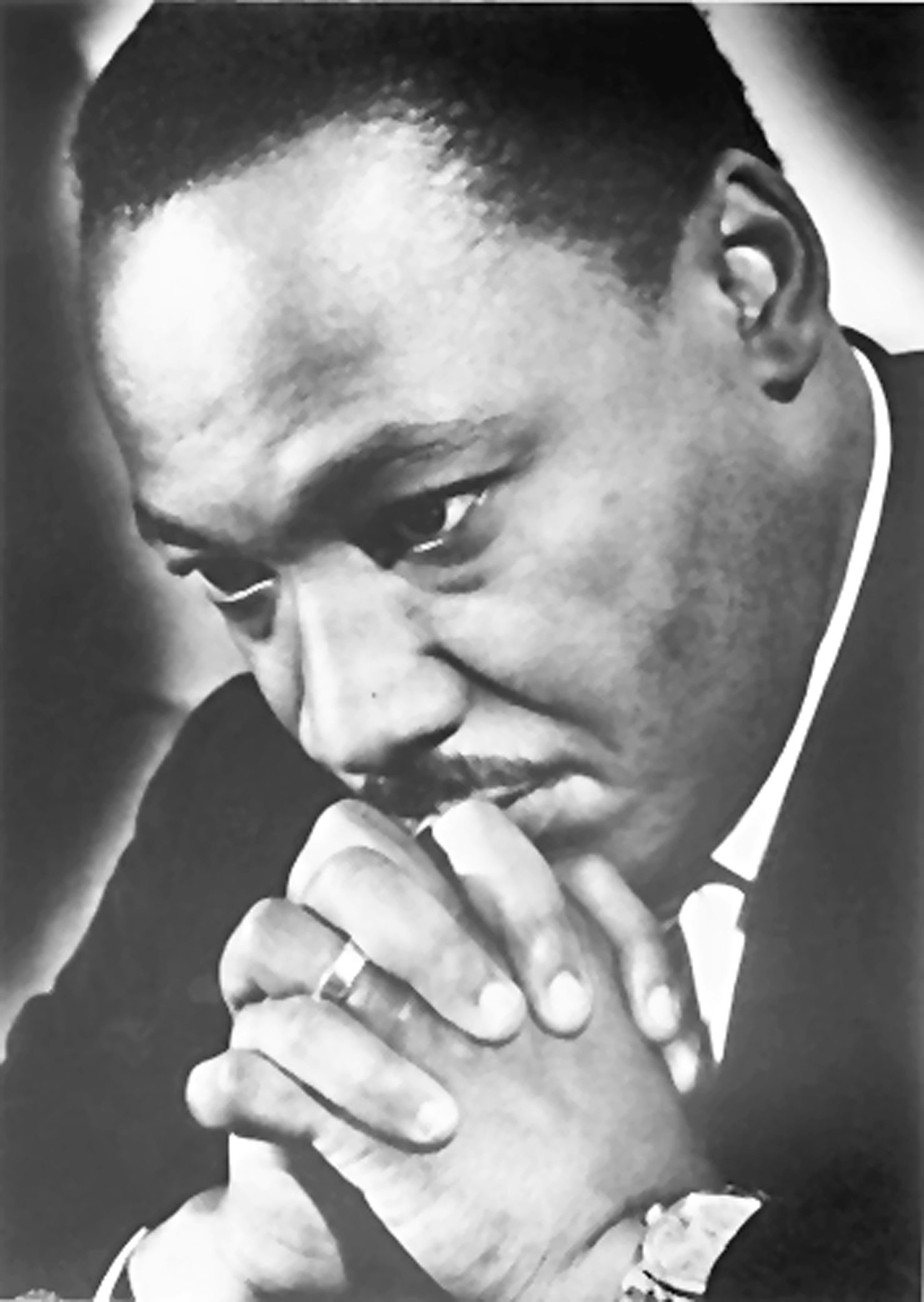
As I'm sure you've noticed by now, today is Martin Luther King Jr. Day.  It's one of the easier days to remember because we have school off and other things like that to point out that today we should be doing something out of the ordinary.

So, what did we use this opportunity to do?

Well I for one attended to my tomes of homework. I'm not really proud that this is how things ended up, though.. There are so many better ways to commemorate Reverend King.

I'm not going to focus on telling you facts about King's life. You all probably know that he was an African American supporter of the Civil Rights movement in the 50's. You all know that he had dreams, that he gave speeches and wrote letters from prisons he was placed in because of his nonviolent acts of civil disobedience.
He was a pretty influential guy, right?  So why do we dedicate an entire day of our busy lives to him?  The only other people who have a US Holiday to their name are George Washington and Christopher Colombus. The idea for MLK day was originally proposed in 1979, but the bill didn't pass. Many people were opposed because the federally-paid holiday would affect the budget, plus King was a private citizen who had never held public office.  This mode of honoring him would seem to break tradition.

Eventually MLK day was signed into law in 1983 and was first observed in 1986.  Some states were reluctant to observe the holiday, though.  The bill had been met with an overwhelming (veto-proof!) vote in congress, but many states tried to find loopholes such as combining it with other holidays or changing its name.  The holiday wasn't officially observed by all 50 states until the year 2000.

That's thirteen years ago, people.  Most of us were alive then, and there were some states still stubbornly avoiding honoring Martin Luther King Jr. Day.

Aside from the cost concerns of a holiday and the fact that it has probably the longest name of any US holiday, why would a state go so far to avoid this holiday?

Well, to answer that, we really need to understand what this holiday is recognizing.  Obviously Reverend King is best known for his involvement in the Civil Rights movement. He was also an inspirational speaker on many other topics (I encourage you--and myself--to read more of his speeches and writings) but no doubt MLK day chiefly recognizes his belief in civil equality. In fact, Martin Luther King Day has been observed in places outside the US- including Hiroshima, Toronto, and Jerusalem under various circumstances.  Each of these observances have been in honor of King's work for civil rights.
So believe it or not, there are still people who oppose civil rights.  In the 21st century.  And some of those people hold public office.  So they were elected by yet more people who seem to oppose the ongoing fight for civil rights.

Is it just a race thing?  As sad as it is to admit, there is still a great deal of racism in the world.  You read about slavering ending with the Civil War, and then the Civil Rights Movement, and think to yourself, "I am so glad that we have finally moved past that as humans."
Well, unfortunately, we haven't.  It has taken us so long to get this far, and we still have so far to go.


I met a man on campus the other day and spoke with him for a while.  He was Saudi Arabian, and was studying here before returning to his country for a graduate degree.  I asked why he came here, and he told me that he had originally gone to London, but that the people there were too racist.  He moved to the United States instead.

Now, before you pat yourself on the back for being a city on the hill, realize that we're pretty racist here, too.  Not necessarily against Saudi Arabians, but there is a lot of intolerance toward Mexicans and South Americans because of immigration struggles.  There are many hate crimes committed against Muslims.  And there are still instances of outright white-supremacist racism.  It's active and it's here, and sometimes it's us.

And of course you're thinking to yourself "well I'm not the problem..."  But sometimes it's hard to realize that maybe you are.  Do you stereotype every Spanish-speaking person you see as "Mexican"?  Believe it or not, many people take offense to that.  Take a minute to think about the things you assume.  You can even have a conversation with people you know about the racially inept things people do, both that you've seen and that you've experienced.  It might not be the easiest of conversations to have, but it will be eye-opening for everyone involved.
Another thing you can do to really honor Martin Luther King and his efforts is to view the day as an opportunity for civil service.  In various areas around the nation, MLK day has become "Martin Luther King Day of Service" and citizens are encouraged to spend the day volunteering to make a difference.  There are so many things you can do in Reverend King's name to commemorate the occasion.  I personally would promote the continuation of the fight for civil rights (it's an ongoing process. So many people worldwide and here in America are denied rights!) or some other public involvement.  But really doing anything to promote peace and understanding throughout your community would easily mark the day.  After all, one of my favorite quotes from Reverend King is this: 

Love is creative and redemptive. Love builds up and unites; hate tears down and destroys. The aftermath of the ‘fight with fire’ method which you suggest is bitterness and chaos, the aftermath of the love method is reconciliation and creation of the beloved community. Physical force can repress, restrain, coerce, destroy, but it cannot create and organize anything permanent; only love can do that. Yes, love—which means understanding, creative, redemptive goodwill, even for one’s enemies—is the solution to the race problem.

The biggest part of today is to carry on doing good.  To continue the pursuit of our happiness and our dreams.  You can kill a man, but you cannot kill what he stood for if that notion and that dream is carried out in the heart of the people.  Not the hearts, but the singular, shared heart of a community unified in mind and in goal.

So I know we're all caught up in important things today.  I still have homework to attend to. I didn't actively commit to civil service today.  But that doesn't mean that I didn't take some time to reflect on my life and the lives of those around me, and whether we are living the best way we can.  And it also doesn't mean that I can't continue to pursue the dreams of this nation and this world another day.  I can serve someone tomorrow.  I can extend love to another person any day this week.  Every single effort we make to do things like that will take us closer to our inevitable goal:


Our goal is to create a beloved community
and this will require a qualitative change in our souls
as well as a quantitative change in our lives.
-Dr. Martin Luther King Jr.

Sunday, December 30, 2012

titulari


As I'm sure you all know, the year is now drawing to a close, and many people like to reflect on the year past.  For Lionel Messi, that includes a record-breaking 91 goals in a calendar year.
 
The record that he broke, though, is also worth reflection. It was previously held by German forward Gerhard "Gerd" Müller, who in 1972 scored 85 goals.  That's right, his record stood for 40 years.

Messi's 91 goals were scored over 69 games, and if you're a Messi fanatic, here's a great website worshipping his accomplishments this year. It has plenty of graphs :)

Müller's 85 goals were scored over 60 games, and if you do the math, Müller, aka "Der Bomber" averaged more goals per game than Messi.  Müller is currently ranked tenth on the list of all-time international goalscorers, despite playing fewer career matches than any player featured in the top 25. He began his professional football career at the age of 18 in 1964. Müller quickly established his value as a striker and made huge appearances in the World Cup, scoring 10 goals in the 1970 games (earning him a Golden Boot*), and scoring the winning goal against Holland to see West Germany take the 1974 Cup.  In these two World Cup appearances, Müller scored a total of 14 goals, setting a record that would not be broken for 32 years.


Müller, far left, all old school and classy. He enjoyed wearing the number 13.

Just to put this in perspective, many records are broken fairly often.  Watch the Olympic Games and you'll see a new record being made in almost every race (track and swimming, for example).  So for a record to stand so far beyond anyone else's reach for 40 years, the person who set that bar is certainly the stuff of legend.

Müller, sometimes teasingly called "short fat Müller" by his earlier coaches and teammates still holds several national and league records, as well as the international record of 66 goals in 74 European Club games.  

And who knows whether Messi will challenge any more of Der Bomber's records.  Messi still has quite a career ahead of him.  Gerd Müller himself congratulated Messi on breaking the record this December, and commented that the Argentine's only fault as a footballer is that he doesn't play for Bayern Munich.

(Hallo to all my German readers...interestingly, I do have a fair number of pageviews from Germany. :D)


*For any soccer illiterates here, the Golden Boot award goes to the World Cup player who has scored the most goals in the tournament.  The last couple awards have gone to players who have scored only 5 goals, and the average number of goals scored by a Golden Boot player is 7. 

Tuesday, December 25, 2012

campanis

And now for a Christmas poem:

...but first, some history.

The Civil War started in 1861. Hopefully many of you are aware of this already. What you may not be aware of, though is this: that was the same year that Henry Wadsworth Longfellow's wife, Fanny died.  It was July and the Massachusetts air was stifling and stale. In hope of relief, every house had its windows open to invite whatever breeze there may be.  Mrs. Longfellow had just finished trimming her girls' hair in an effort to cool them, and had decided to keep a lock or two.  She lit a candle to melt some sealing wax, just as the first breeze of the day entered the window she stood next to.  Unfortunately this drought brought none of the long-awaited relief Fanny was desperate for, as it led the  light summer dress she was wearing into the flame of her candle.  She was soon engulfed in flames, and in an effort to protect her young girls nearby, Fanny fled to her husband in the next room.  There, Henry tried to smother the flames with a throw rug that proved too small to be effective.  In desperation, he flung himself at her, using his arms and body to extinguish the fire.  Fanny died the next day, suffering severely from her burns. Ill from grief, Henry was unable to attend her funeral, also suffering from burns on his face, arms, and hands.

Longfellow's characteristic beard is a result of his
difficulty shaving after sustaining burns on his face. 

That first Christmas following Fanny's death, Longfellow wrote:
"How inexpressibly sad are all holidays."

The ensuing year offered little comfort, and the Christmas of 1862 was marked in Longfellow's journal with:
"'A merry Christmas', say the children, but that is no more for me." 

The year of 1863 was a difficult one on the nation as the Civil War continued without promise of ending, and it brought further tragedy to the Longfellow household, as Henry received news that his eldest son Charles, a Lieutenant in the Union Army, had been severely wounded by a bullet taken under the shoulder blade and damaging the spine. In his journal that year, Longfellow silently offered no insight to the weight of his grief.

The Christmas of 1864, Longfellow penned the following:


I heard the bells on Christmas Day
Their old, familiar carols play,
And mild and sweet 
The words repeat
Of peace on earth, good-will to men!
And thought how, as the day had come,
The belfries of all Christendom
Had rolled along
The unbroken song
Of peace on earth, good-will to men!
Till ringing, singing on its way,
The world revolved from night to day,
A voice, a chime,
A chant sublime
Of peace on earth, good-will to men!
Then from each black, accursed mouth
The cannon thundered in the South,
And with the sound
The carols drowned
Of peace on earth, good-will to men!
It was as if an earthquake rent
The hearth-stones of a continent,
And made forlorn
The households born
Of peace on earth, good-will to men!
And in despair I bowed my head;
"There is no peace on earth," I said;
"For hate is strong,
And mocks the song
Of peace on earth, good-will to men!"

Then pealed the bells more loud and deep:
"God is not dead, nor doth He sleep;
The Wrong shall fail,
The Right prevail,
With peace on earth, good-will to men!"


You will likely recognize this as a popular Christmas carol.  Indeed, it is one of my favorite Christmas hymns. It was set to music in 1872 and Longfellow's healing resolution has been resounded ever since.

Happy Christmas.

Friday, December 21, 2012

gyrus

And now, as promised, a post before the end of the world.

So my family and I visited the Yucatán peninsula a couple years ago.  We toured the ruins of various civilizations there, largely known as the Maya.  Of course, each independent civilization was a little bit different, but there were many striking commonalities between the two or three groups we studied there, and so it will be simpler and still fairly correct to lump them all into one general group of Mayans.

We visited Chichen Itza, perhaps the most popular Mayan site.


This Central American ziggurat is also believed to be a calendar, as it has a total of 365 steps on each side.  A theme throughout much of Mayan construction was that their structures would align with the sun in specific ways on important dates including equinoxes and solstices.  For example, el Castillo (above) has a snake head at the bottom of its staircase, and on the equinoxes the body is perfectly illuminated.  To the Maya, this represented the serpent either ascending or descending (depending on the equinox).  Other structures featured windows that would align with sunrise or sunset on specific dates.  One such date is April 6th, for anyone to whom that is significant. :)

There are so many fascinating things about Maya culture and the things they constructed with such careful precision. They studied the stars, and even built observatories (below), and even though they are known for being bloodthirsty in their rituals and contests, I find them to be an advanced and scientific civilization.


They created a solar calendar that is highly accurate in correlation to our current calendar, which is quite a mathematical feat.  They mastered principles of acoustics, astronomy, architecture, medicine, and so much more.  So they do have quite a bit of credence for predicting the end of the world.
But did they really do that?
Something interesting about the Mayan culture (almost religion, really) is that they were very dedicated to cycles.  Seasons, years, astronomical events...there are countless cycles that we experience throughout a lifetime. The Maya believed that the Earth completed many different cycles, some 52 years long, some 5125 years long.  Today marks the end of the thirteenth 5125-year long cycle, called a Baktun, and the beginning of a new one. Many people are elated at the new beginnings and believe that we have started a new and better age.

So where do we get all these prophecies of doom?
Well, the Maya do believe that the Earth goes through elemental cleansings from time to time (another cyclical occurrence).  One such cleansing, that of Water several millenia ago, is commonly known as Noah's flood.  So there has been speculation that this new Baktun could usher in another elemental cleansing, perhaps of fire, earth, or air.
Aside from the Maya, there has been mass speculation from the scientific world for several years now saying that the world is due for a few massive explosions having to do with tectonic pressures and other sub-surface happenings.  Yellowstone National Park is one such hotspot, waiting for a meltdown.
There have been several astronomical speculations from the scientific world as well, as the end of 2012 coincides with a solar maximum, an 11-year cycle where the sun reaches a maximum of sunspots and radiation.
In addition to the solar maximum, our solar system is allegedly passing through an area of its orbit through the galaxy that will bring it closer to the center than ever before, and some are expecting disasters to yield from our unusual proximity to what is commonly regarded as a black hole at the center of the milky way.
And for the Mormons reading my blog, there's quite a bit of hearsay about China opening soon (or already being opened, depending on who you ask, and whose Bishop's wife heard it from a relief society lady who was friends with the wife of an Area Seventy who overheard it in an elevator in the Church office buildings...)
(If you're not Mormon and you have no idea what China opening means, and how that even relates to the end of the world, all I can say to you is to investigate the Mormon church's missionary system and maybe you'll get an explanation later.)

Overall, it seems to me that 2012 is the coincidence of any number of cycles beginning anew, reaching an apex, or some other significant part of the cycle, and the sum of it all is what many are regarding as the end of the world, which is something we seem to have been waiting for for quite some time.
Personally, I do not believe that this world will end anytime soon (which is a very relative term, so...I'm right no matter what, ha!) but I do believe that it is the beginning of a new epoch. I wouldn't be surprised if there were any manner of disasters, natural or otherwise. I might even be excited for the challenge.

So for now, keep on being alive, go ahead and celebrate being alive if you must (which is something you should do every day...you don't need an excuse like an apocalypse to do that) and participate in the cleansing of the earth by improving yourself and the world immediately around you.

Friday, December 7, 2012

tempus

Today is December 7th, and unfortunately that statement doesn't really do much for many people.   Allow me to jog your memory (better me than Fezzik) :
Still not sure what's going on?
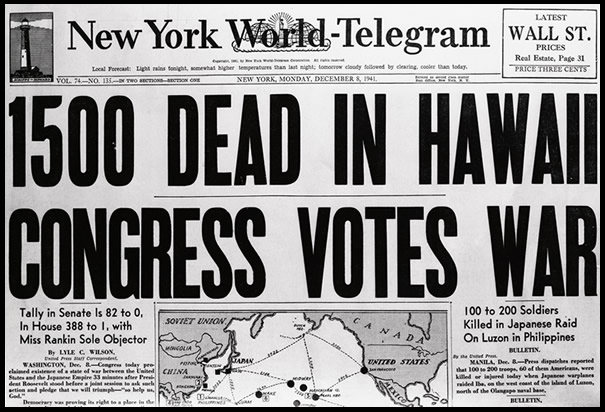
Oh yeah.  Pearl Harbor.  The entry of the United States to World War 2.

It seems to me, though, that the only people really commemorating the anniversary today are history buffs, WW2 vets, and the few people still alive who were around back in 1941.
I mean, Google didn't even commemorate the anniversary with a Google Doodle.

Contrast this to the attacks on the Pentagon and the World Trade Center.  It's been just over 11 years and the majority of the country still gathers in commemoration and sometimes mourning.  There are differing reactions to it, some regard the victims as heroes.  Some argue that we ought to move on and stop fighting terror wars in the Middle East. Some are  almost indifferent, having little connection to the people and events of the day.  But the popular motto of the day is "We shall never forget".

This is a nice sentiment, certainly for those who lost loved ones in the attacks, to never have their sacrifices for their country be forgotten, whether they were in the towers, the pentagon, on the planes, or part of the response teams.  But is this a promise that we can really keep?

You see, time heals all wounds.  You may be skeptical of this statement, but given enough time, pain eventually loses its sting.  Which is why today, Pearl Harbor Day, is not a big deal to anyone.  No songs sung, no grand memorial services, no public programs..maybe a special on the History Channel.  It's not because we've forgotten that Japan attacked us 71 years ago, it's that the pain of the event has dulled for us as a country.  We're no longer bitter enemies with Japan, we've since recovered in Pearl Harbor, and it's not weighing on our minds and hearts anymore.  We've moved on and replaced that pain with other pains since.

And one day in the future, we'll adopt the same attitude about September 11th.  Those with a very personal connection will still honor the day, but their grief will diminish from year to year.  Perhaps we'll pull out of our Middle Eastern turmoils, and maybe even form alliances with those nations who have harmed us.  (After all, we did so with Japan, Germany, and other Axis powers.)  We'll still remember, but the event will be far in the back of our minds.

So take a minute, if you would, to pay some respect to our Armed Forces.  If you have a personal connection to a serviceman or woman, thank them.  But don't feel too bad for not going to extremes to commemorate an event.  After all, you can barely see America's Pearl Harbor scars anymore.