Translate

Showing posts with label religion. Show all posts

Sunday, December 25, 2016

prophetia


To everyone celebrating Christmas today, Happy Christmas!

One of the cool (and maybe difficult) things about being an adult around Christmastime is that you don't feel the same magical anticipation that you did as a child. I remember that Christmas for my young self was a constant joy filled with unchanging traditions, familiar anticipation, and a reliable source of magic.  As you grow up, each Christmas becomes more distinct. You amend some traditions, anticipation gives way to long shopping lists and party preparations, and you have to find magic in different things each year.  

I sat in church a few weeks ago, thinking about what Christmas was really about. Like, I know it's about the birth of Christ, and by association his life and mission of salvation. I've been taught that since before I was born. But we celebrate the suffering and resurrection of Christ at Easter, too. I wondered if Christmas is really a repetition of that (I mean, it's a pretty big deal so celebrating it twice is probably fine), or if there's something unique about Christmas by virtue of observing His birth.

Image result for angel appeared to shepherds

Among the many special things that people celebrate specifically at Christmas and because of the Christmas story, I found a new insight that I hadn't really focused on before.  A lot of the traditional Christmas story focuses on various people receiving prophecy.  Mary is visited by an angel to inform her of her calling to be the mother of Christ. Joseph receives heavenly witness and direction concerning his roles in the upcoming events. Wise men from distant lands knew of signs that would accompany the birth of a new King. And as the foretold events unfolded, angels appeared to shepherds, delivering the news and telling them where to go and how to recognize the Christ child.

In the Book of Mormon, people inhabiting the American continents during the time of Christ's birth looked forward to signs of his birth, as they had been prophesied by ministers in those lands. The signs came as witness that Christ had come into the world, and in earnest that the other prophesies concerning the Savior would likewise be fulfilled.

Christ's birth is an event that was originally celebrated as the fulfilling of God's promises and prophecies.  And His birth came as a touchstone sign that the other prophecies were indeed true--that God would send a Savior to overcome death and hell, and that Christ would accomplish the divine task of mercy and salvation. This had not yet happened, yet the faith that it would come to pass is what made that Christmas night a special celebration for those who gathered in the stable-temple.

Image result for angel appeared to shepherds

So this year, I celebrated Christmas as the pivot point of prophecy, and as our ability to rely on God to fulfill His promises. It was a new insight to me, and to the role that prophecy and faith plays in my own life and holiday observance. And it brought a new sparkle to Christmas for me.

Sunday, May 5, 2013

profectus

Okay.  We are now back from the break we call "Finals".  Back to our regularly scheduled program.

So, I'm pretty sure that regardless of your personal beliefs or religious inclinations, we can all agree that while we're here on earth, regardless of what happens to us afterward, we are here to progress as individuals, families, and society.  Like I said, I'm pretty sure about this, but if your take on the world and life disagrees with this, please tell me in the comments because I would like to know if my assumption is inaccurate.
For now, though, we'll operate on the assumption that everyone want to progress as a human and as groups of humans.


For the sake of thought development (yep, this is developing as we're going...but that is one of the best benefits of writing, in my opinion) we can progress consciously, where we are actively making an effort and thinking about furthering our position in the world, or we can progress, hmm....inherently? accidentally? where you don't put specific effort into it, but you look back after a year or so and say "wow, I've grown so much."

Ah, got it: active and passive progress.

Either way, you progress.  You reach a point that is better in one area or another than your previous self was.  And this is wonderful, because it is what you wanted to get out of life, one way or another.  Mission accomplished! Congratulations!

So, my question is this: Which form of progress is worth more?  Which yields more progress?

See, with active progress, you're actively learning things about yourself and how to achieve a goal.
For example, you set out to actively become more patient.  You do things like remind yourself when you're in line at the grocery store or driving on the freeway that it's okay to not complain about the people around you, and that driving the speed limit won't kill you.  You'll get there when you get there.  When your children/siblings/uncles (whoever you have in your life to try your patience) color on the walls/borrow your clothes without asking/harass you about boys (whatever it is they do to give you so many opportunities to practice being patient), you actively remind yourself to take a breath and not explode, but patiently help them clean the walls/request that they wash and return your apparel/change the subject to soccer (whatever it is you do to make the experience a good one for your relationship).
And at the end of the day, you think back about the things that happened and the choices you made, and report to yourself whether you effectively progressed in being patient that day, or if you need to change tactics and try something different tomorrow.

The benefit with this is that you are forming yourself and actively participating in changing your thoughts and behaviors, so it means a lot to you and you're able to monitor and effect your own progress.

Passive progress gets a little more theological, it seems.  Whether you believe that everything happens for a reason, or there's someone up there orchestrating your life and putting things in your path, or that the human race is bound to evolve and the universe just naturally supports that, we are consistently being led to situations that will try us and help us grow.  This is manifest in those times that you look back on your life and realize that you've become much more patient than you used to be.  And you weren't even aware!  The benefit here is that you change and grown in ways that you never imagined.  Either it wasn't something you would have chosen to change yourself, or you end up somewhere you would never have thought you could be.  You can't limit yourself if you're willing to progress this way.


So which is better?  If you're reporting on how you've become a more patient person, does this only involve active progress, or does your 'accidental' passive progress count toward your efforts as well?  It certainly counts toward the end product...

I think the answer to this, as in most things, is that you need some of both.  You need some balance, some yin with your yang.  To benefit the most, you must on all kinds of benefits.  In careers we try to specialize, but in life we must expand and broaden.


Thursday, April 11, 2013

temporum

The scholastic year is now drawing to a close, and I'm just now realizing some very valuable things that perhaps have been growing within my mind all throughout the year and are just now blossoming into the maturity that only experience can bring.

The first of these was made known to me around the end of last semester.  Isn't that nice, how your own thoughts can make themselves known to you?  They've been hiding and waiting for a good opportunity to present themselves all this time...because they know that timing is everything.

See, I was reflecting on some of the books that I had "read" throughout middle school and high school and wondered why I now found myself going to the library and checking out classic literature, something that I never imagined myself doing when I was younger and struggling through Animal Farm.  Clearly, there is something wonderful about this literature that I completely ignored or missed when I was younger.

Perhaps some of it had to do with being 'forced' to read the book. When you're in the middle of your cherished teenage years and someone says "read Farenheit 451. It's about questioning authority," there's something inside of you that is like "Oh yeah?  Why should I read your dumb book?  What if I have better things to do? What if I just don't want to? Huh?" And that mindset kindof taints the reading experience.

Perhaps some of it had to be with being in eighth grade and understanding that Animal Farm was an allegory about some sort of tyrannical situation, but being 13 or 14 years old and having no idea who Trotsky is and only being able to compare everything bad to Hitler...you'd be frustrated at not getting the allegory.

Perhaps some of it had to do with not experiencing enough of the world yet to understand what was going on.  Racism was something we'd only read about; grief was something we'd never quite touched; love was something we could only abuse.

With this realization, I decided that I ought to reread some of the books I didn't ingest fully the first time around.  This is, of course, easier said than done because there are all sorts of books out there begging to be read for the first time, and you want to take the time to reread something you didn't like the first time around?  Silly, silly...

So I haven't made it back to any books yet, but I've thought more about timing and life events, and I realized that perhaps if I had learned to play the piano at a different time, I'd have learned to love it and become proficient.  I could learn to play all sorts of beautiful music that I hadn't known existed until recently...

Perhaps if I had fallen in love with soccer earlier, I could have turned that into much more than a recreational passion.


There are all sorts of what-if questions in regard to timing.  But my wise seventh grade teacher told me at the beginning of the year that contrary to popular belief, there is a such thing as a stupid question, and most often those stupid questions start with "what if".

So don't get bogged down in stupid questions.  I've found that things move in and out of my life with immaculate timing to make me the person I am and keep me on track to the person I'm becoming. If something doesn't work out the first time, that doesn't mean it isn't meant to be, it just means it's not the right time.

And just for the record, I'm not the only person to have this sentiment.

"To every thing there is a season, and a time to every purpose under the heaven"
-Ecclesiastes 3:1

Sunday, April 7, 2013

servitium

So, for the past couple weeks I participated in what you might call a challenge.  I made a particular effort to notice the small acts of service that other people perform daily.  Things that usually go unnoticed or taken for granted.  For me, this was best done by having a small notebook to write things in.  That way, I was consciously recognizing things and spending some thought on them, rather than just a fleeting moment of mental capacity.  My record is more permanent and meaningful.

And hopefully people don't think I'm creepy, writing down the good things they do. :P

Anyway, over the course of just less than 20 days, I recorded nearly 120 various acts of service.  Some were bigger things, like somebody cooking dinner for me when I was too stressed with studying to do it myself.  Others were smaller, like a particular compliment, or someone opening the door for someone else.  Some of the services I recorded were done on my behalf, some on behalf of my friends, and some for people I didn't even know.  Many were performed by my friends, and many others were by strangers.

Doing this gave me some hope for society and the world.  It made it clear that the world around me and the people in it are good.  It encouraged and inspired me to be more generous and gracious toward those around me, whether I know them or not.

The cool thing is that sometimes that can be as easy as a conversation.  There were several times that somebody I didn't know very well would just talk to me as we walked from one class to another.  Although we still don't know each other well and that one conversation didn't have a lasting affect on our relationship, I was still grateful to have someone to talk to that day; it always brightened my mood.


I encourage you to look around you at the good that other people are doing in the world.  It's a refreshing experience and makes living a little bit easier, knowing that other people around you care about you, as well as the others in their lives.  They care about the world they live in, and they love it enough to improve it, bit by bit.

Tuesday, March 26, 2013

problemata

Lately I have been aware of a lot of problems here in life that don't really have answers.

"Why does it have to be so hard all the time?"
"My roommate drives me crazy."      
"Is there something wrong with me?"
"My best friend is too busy to talk to me anymore."
"I hate it when class gets out late."    
"I'm always so angry at my parents."
             "I feel like I'm just a burden to my friends."
I DON'T KNOW WHAT TO DO.

What are you supposed to do? All of these problems are so complex and each situation is so personal and unique that there really aren't answers.  There's no one-size-fits-all solution.  If there was, I would hope that humanity would have found it after so many millenia of existence...But we have to face our problems and our lives on our own. We can't rely on the past, and there aren't any answers in the back of the book.  Alas.  This isn't math.

But there has to be some way to fix stuff like this, otherwise the world would be a terribly oppressive and miserable place. And I've found that for the most part, it isn't...so what's the answer we're missing?

Well, amid all the suggestions from religion, philosophy, science, politics, and so many other views or schools of thought, I've realized that the way I must answer the question is the way an engineer would.

Problem: half the volume of a glass contains water.
Optimist's solution: "yes! I have half a cup of water!"
Pessimist's solution: "curses.  I don't have half a cup of water."
Engineer's solution: "This cup has twice the necessary volume."

(hopefully this is not the first time you have heard that lame joke...XP)

Anyway, the lame joke was demonstrating an engineering approach, which I will now apply to the life problems.
Rather than fixing the problem, sometimes you just need to view the problem differently and redefine it.
So instead of wondering what to do and where to go and why things suck...realize that none of these things are problems.
Your problem is this:
YOU HAVE PROBLEMS.


So in order to fix this, just stop having problems.

"Gee thanks", you say.

No really.  If you can change your perspective and thoughts on life such that you no longer perceive these things as tragedies and problems, then it doesn't matter who your roommate is or how busy your best friend is or how hard life is right now, because you don't think it's a problem anymore.
Your problems don't have to have answers to go away.

It's a hard thing to do.  I am certainly not telling you that this is easy. I'm still not there all the way.  But maybe it's something to consider trying.

Best of luck. :)

Thursday, March 14, 2013

genius verus

Aaaand...it's Pi day. :D

Hopefully the majority of my readership is well acquainted with pi, though.  So I thought it might be important to celebrate another event in conjunction with pi day.

Don't worry, fellow nerds...pi is not being abandoned, nor is nerd-dom.  

It's time for a birthday party :D

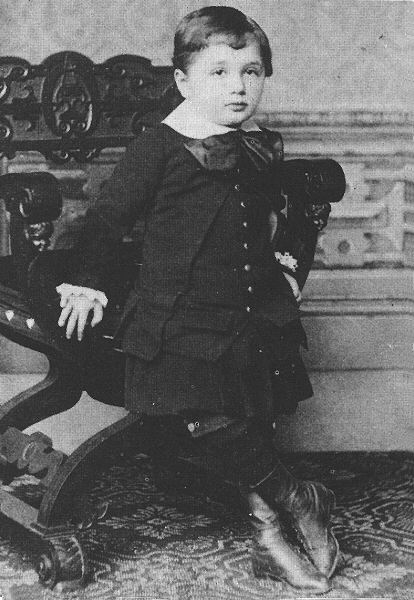
Today in 1879 in Germany, Alberto Einstein was born.  Being German, his parents opted to call him "Albert" for short.  Born on pi day.  He was destined for greatness.
young Albert quickly outgrew the awkward baby stage
and became a dapper young lad.
Most people know the standard Einstein trivia: he was a theoretical physicist, he was a pioneer of the Manhattan project shortly after becoming a US citizen, is one of the more prominent geniuses of history...

I mean, you really cannot dispute the genius of a man whose brain has its own wikipedia article.
By the way, all of the silliness saying that Albert Einstein's brain was significantly smaller than the average man's is...partially true.  We'll have to discuss this fascinating neuroscience later.
(Just don't believe everything you hear about brain sizes; you might begin to believe that women are stupider than men because their brains are smaller.)

So.  Einstein was all about mathematics and physics and the universe and complex stuff like that, right?  Well the funny thing about being human is that you must also dabble in things like religion and arts and other aspects of life.  Man cannot exist on math alone.  Albert Einstein did many things throughout his lifetime.  He learned to play the violin as a child and continued his beloved hobby passionately, perhaps to get his mind off math once in a while.  He went through three marriages and had three children and learned a thing or two about love in the process.  He offered a fair amount of political and theological commentary, as well as physical theories.  His ideas in physics were met with much higher regard, however, leading to a Nobel Prize in physics.

Einstein would often hang out with Niels Bohr (Sorry, that's not a creation of Bram Stoker...it's a scientist) and discuss quantum mechanics.  You know, the way that buddies do. 
Despite being so heavily involved in math and physics, Albert Einstein is quite quotable. Many people seem to think that people who are crazy with the hard sciences are difficult people to understand and are probably too smart to talk to, but I believe that a conversation with Einstein would be fulfilling, enlightening, and enjoyable no matter what your IQ was or where you were in life.

Here are a few quotes of his.  He had many, and it's difficult to choose a favorite. (If you have a favorite, mention it in the commentary of this post!)
  • Everything should be made as simple as possible, but not simpler.
  • Science is a wonderful thing if one does not have to earn one's living at it.
  • The only thing that interferes with my learning is my education.
  • Peace cannot be kept by force. It can only be achieved by understanding.
  • The most incomprehensible thing about the world is that it is comprehensible.
I'm often inclined to list Albert Einstein as a personal hero or inspiring example in my life, and I think the vibe that people get from that is "Oh, look who's the physics hotshot now" which is really not what I'm aiming for.  He was a lot more than just a high-functioning brain somewhere in the universe.  Some science, some philosophy, some music, some religion, some math,  some politics, some love, some humor...


And a whole lot of life.

Thursday, February 21, 2013

identitatem

It's still Black History Month, so to celebrate I thought I'd learn some American History that I previously did not know, and then share it with the world in general so that you can have the opportunity to learn things, too.

Today, February 21st marks the assassination of human rights activist Malcolm X. 


Many inspirational leaders grow up in hardship and overcome it to live a fulfilling life, often because of a strong influence from their family.  Malcolm X, born Malcolm Little, did not.  He was born in 1925 in Nebraska, and suffered much due to racism and hatred.  By his early teens, many of his family members had been harassed by white supremacists.  His father, a black minister who often gave controversial sermons, was brutally killed and his uncle was lynched.  His mother was later placed in a mental hospital and young Malcolm fell into the cracks between foster homes.  He dropped out of school and moved to Boston where he got involved in crime.

At the age of 21, Malcolm X was imprisoned for burglary.  While there, he encountered the ideology of the Nation of Islam, a movement that aimed to improve the quality of life of humanity, specifically African Americans. He was excited by their ideas of black nationalism and racial separatism. It was because of this that he changed his last name to "X", to symbolize his stolen African identity. After six years in prison, Malcolm X was released and became a prominent leader within the Nation of Islam.  He was soon known for his harsh indictment of racial hate crimes and his support of liberation by any means necessary. He was not always on the same page as other civil rights champions, who called for integration and understanding.  Malcolm X advocated racial pride and identity and fierce self-protection.


Malcolm developed as a powerful orator and was admired by much of the African American community.  Eventually his philosophies became very involved and outspoken, such that he was suspended from the Nation of Islam.  This did not inhibit him from being politically active, although it did allow him to investigate other ideologies and reconsider his approaches to ideals.  After breaking with the Nation of Islam, Malcolm made a pilgrimage to Mecca, where he was inspired by the racial harmony amongst orthodox Muslims there.  Upon returning to America, X changed his name to El-Hajj Malik El-Shabazz and founded the Afro-American Unity, an organization that promoted black identity and argued that racism rather than the white community was the cruelest enemy of African Americans (and indeed, any person).  This less extreme philosophy gained many followers and Malcolm X continued to be a strong leader and an involved individual.
Unfortunately, standing up for something sometimes only makes it seem further beyond your reach.  Malcolm was targeted by many who disagreed with him.  In February of 1965, his home was firebombed. He managed to escape, but a week later was shot by Nation of Islam members--his own people--at an organization rally.  
Malcolm's life and death were surrounded by controversy.  Many people condemned him for his extreme views and overzealous methods.  Others revered him for his boldness and strength in the face of pain and difficulty.

To me, Malcolm X was a firm believer in the value of identity.  He went through a few identity changes, outwardly changing his name from Malcolm Little to Malcolm X to El-Hajj Malik El-Shabazz as a reflection of his inner shifts in identity: from identifying himself as a downtrodden shadow of society, to a bold and relentless fighter for his and his peoples' rights, and finally to a warrior for equality and personal identity.  As he encouraged others to be true to their identity, he discovered his own.

Tuesday, January 1, 2013

pars

So, it's New Year's Day.  Happy 2013!

Something you may not know is that the number 2013 has three prime factors: 3,11, and 61.

So my 2013 is going to have three prime factors as well. This is one of the few posts that I'll be talking pretty much exclusively about myself. :P Not super enjoyable (for either of us, I think) but I think appropriate.

Prime Factors of 2013:

1) New people.
Meeting new people is always a good thing. Right now I have so many opportunities to get to know people from different places and lives that have something in common with me, whether that's my education, my sports interests, music...
I want to reach out and see more of the world through other people.

I also want to be able to do more to help the people I meet. Never let an opportunity for service pass you by.
2) Religion.
I want to deepen my understanding of my own religion but also of other religions worldwide. I want to be religiously tolerant and understanding. I want to know where people are coming from in their beliefs and customs. 
3) More reading.
You can never be too well-read.  And there are hundreds of books that I've been wanting to read and have never gotten around to, as well as books that I think I need to reread.  Not to mention books (and articles and websites and any other literature) about things I want to learn about.  Even though I'm attending university right now, I'm tragically limited to only 18 credits or so, so if I want to learn about everything that I want to learn about, I must read furiously.

So there you have it.  I think this should be manageable for 2013, to remember three big things to focus on.  (Much better than, say, 2012, which has prime factors of 2, 2, 2, 2, 503, and 2.)

What are your prime factors of 2013 going to be?